property line
Tell your tree where the property line is!
This study examines property boundaries as a socially charged space in which current climate debates and the logic of private ownership are at odds with one another.
Whilst discussions in an urban context increasingly focus on greening, biodiversity and climate-resilient urban development, the reality of everyday life in the immediate neighbourhood often reveals the opposite: trees are felled, shrubs are radically pruned and ground cover is removed as soon as they cross the clearly defined boundaries of private property.
Nature is perceived there not primarily as an ecological resource, but as a potential disruption to order, visibility and property.
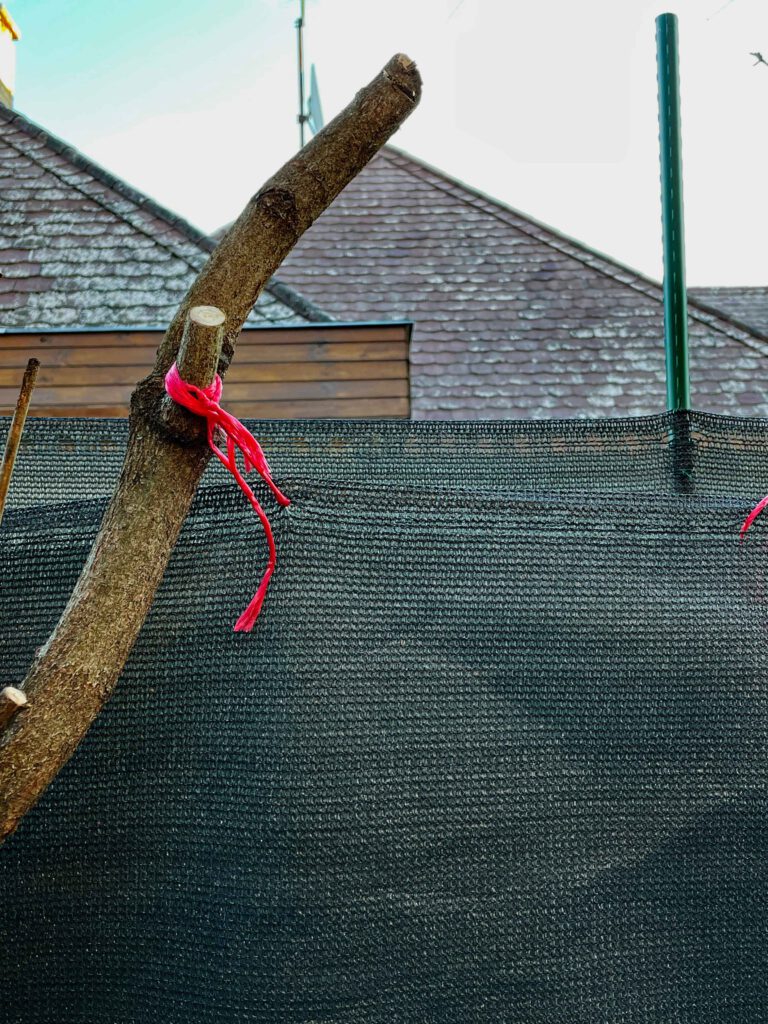
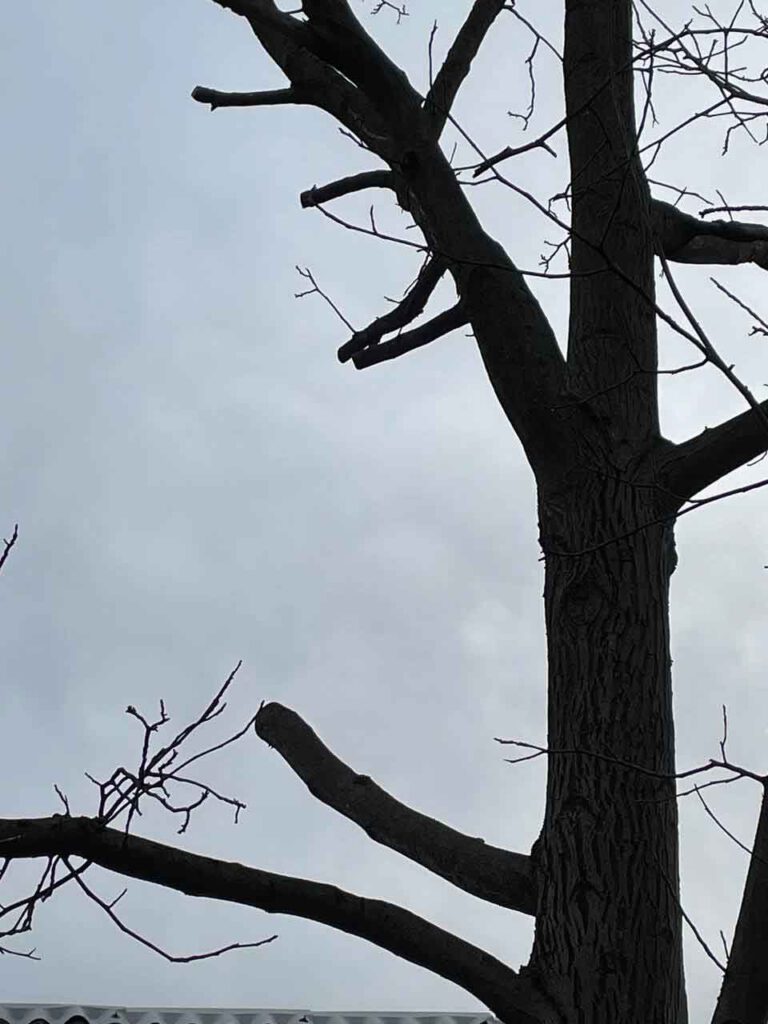
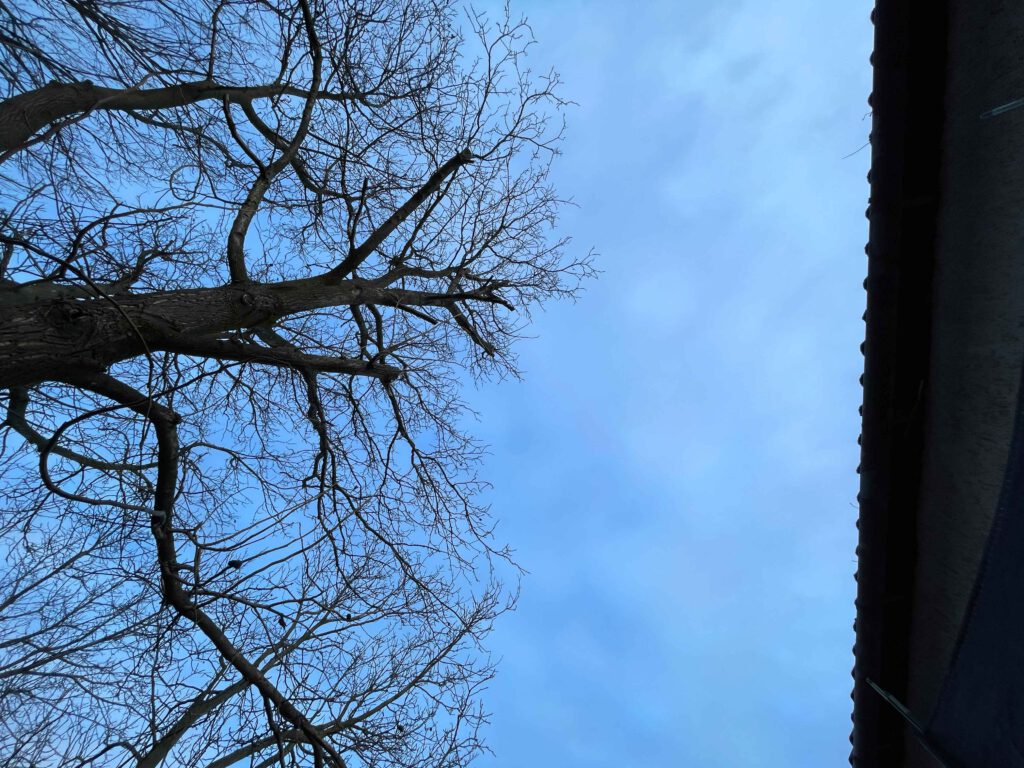
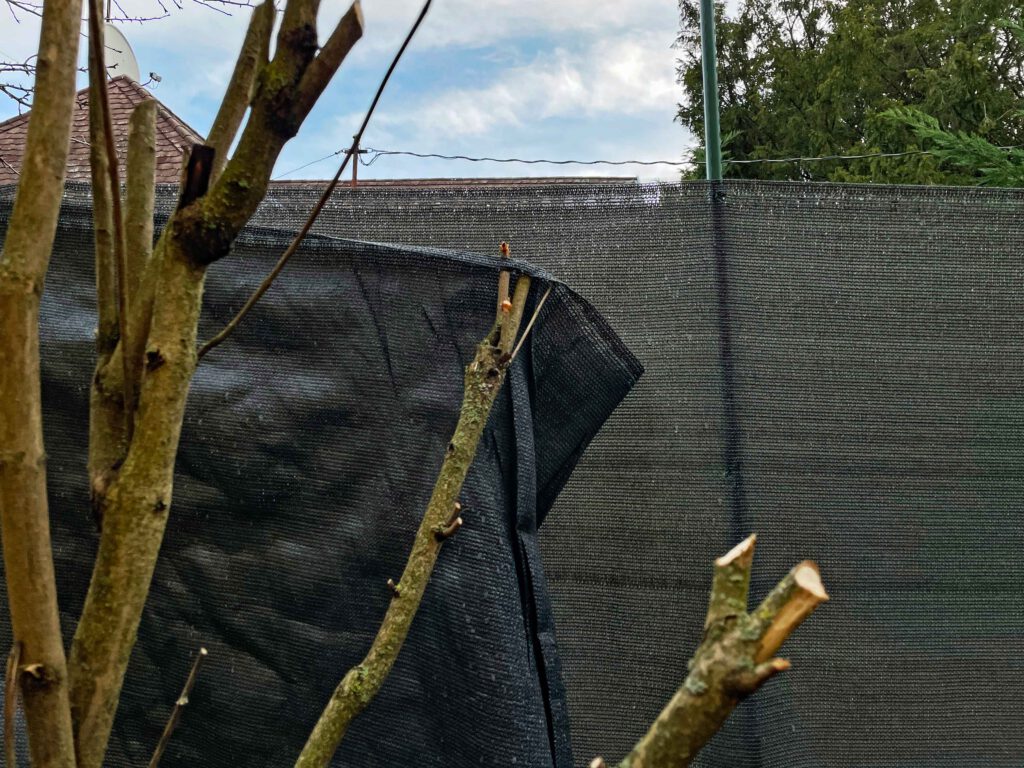
The work reveals how societal notions of control and demarcation are inscribed in the landscape. Natural growth is adapted to man-made lines — “as if drawn with a ruler”.
At the same time, a paradox emerges: precisely the vegetation that is regarded as a climatic and social resource in urban spaces is removed in private contexts and replaced with artificial materials.
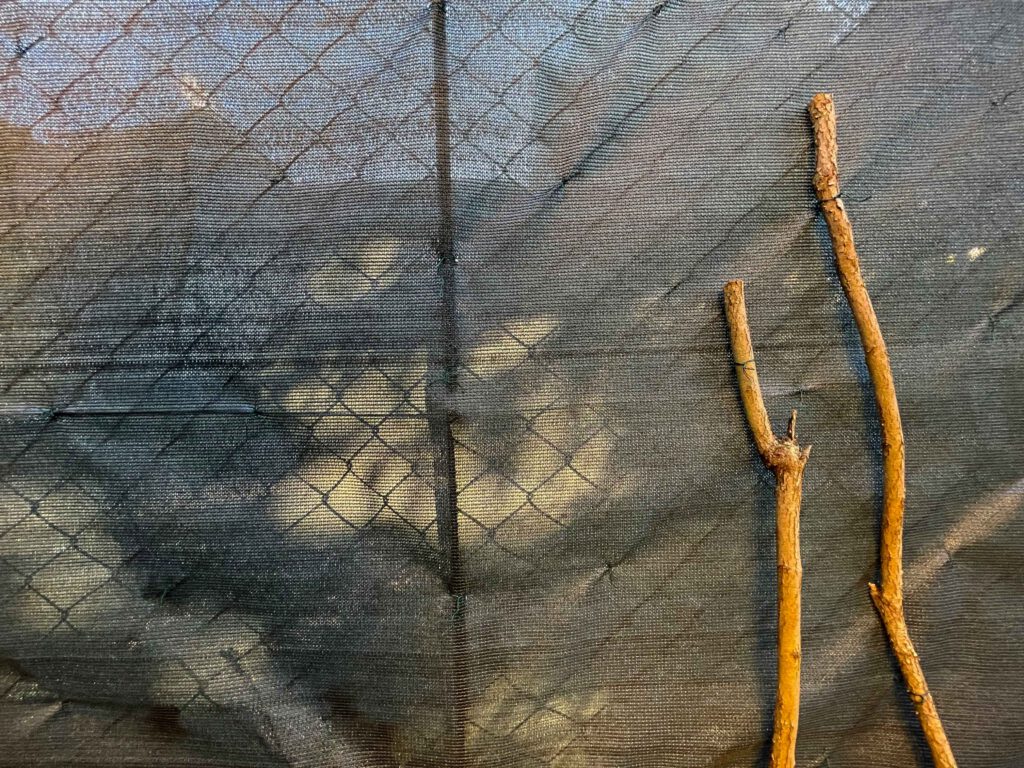
Plastic privacy screens take the place of hedges and trees, replicating their function, yet simultaneously carrying new ecological burdens through decomposition and microplastics.
The series views property boundaries as a space for social negotiation, where climate realities, claims to ownership and everyday aesthetics collide directly — and where the major contradictions in our relationship with nature in the urban age are revealed on a small scale.
Around 70 metres of plastic mesh was used on this fence to restore privacy following a drastic pruning of the vegetation. The minimalist video work captures the ‘negative image’ of the trees and shrubs, which stand at a considerable distance from the fence and cast their shadows onto the mesh in the sunlight. The material moves slightly in the wind, as does the eye; the camera scans the mesh structure that interposes itself between the viewer and the environment, blocking the view. The boundary between inside and outside is no longer marked by nature, but by an industrial material that is itself in a state of decay.
In the background, dogs can be heard barking — an everyday soundscape that evokes associations of rural closeness to nature and supposed tolerance of uncontrolled growth. The work challenges this notion and highlights the contradictions between romanticised images of a connection with nature and the actual mechanisms of social exclusion in everyday life.